
Blog
Understanding MOQ in Jeans Production
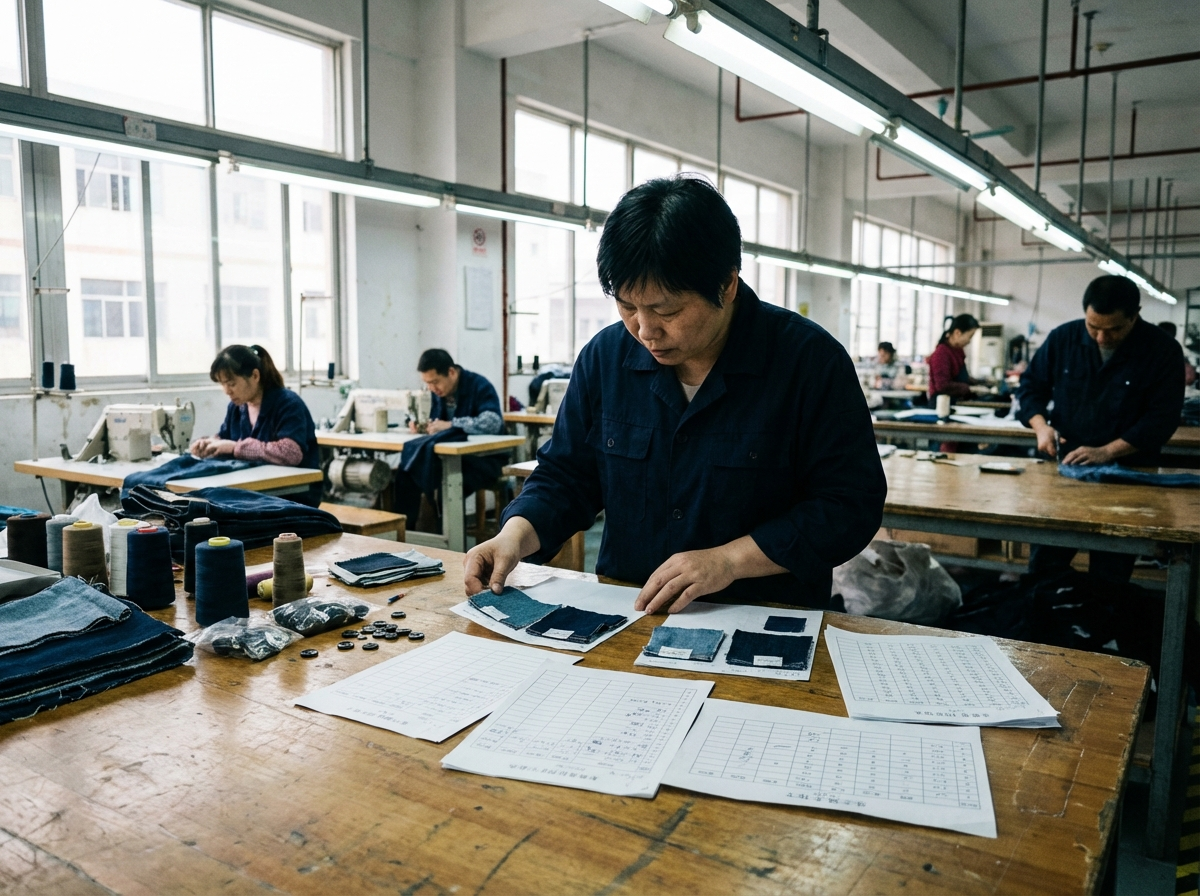
MOQ is one of the first questions buyers ask, and rightly so. In jeans production, MOQ directly affects cost, customization level, material sourcing, and factory planning. But MOQ is often misunderstood. Many people think it is just an arbitrary number decided by the factory. In reality, MOQ is linked to production efficiency and risk management.
To understand MOQ properly, buyers need to think beyond “What is your minimum?” and instead ask, “What production conditions shape that minimum?”
1. What MOQ actually means
MOQ stands for minimum order quantity. In denim manufacturing, it usually refers to the minimum number of units required per style, per wash, or per colorway.
MOQ exists because production involves fixed work before bulk sewing even starts:
- pattern setup
- sample confirmation
- fabric sourcing
- trim preparation
- cutting arrangement
- line allocation
- wash testing
- packaging preparation
If the quantity is too low, those preparation costs are spread across too few garments, which increases the unit cost significantly.
2. Why MOQ matters more in denim
MOQ is especially important in jeans because denim products often involve more variables than simple knitwear.
A jeans order may include:
- specific fabric weight
- wash process
- metal hardware
- multiple stitch colors
- branded trims
- patch application
- size breakdown
- finishing details
Each extra variable makes production more complex. That is why MOQ for a very simple rinse-wash jean may be lower than MOQ for a distressed style with multiple custom trims and packaging elements.
3. MOQ is not always one fixed number
When buyers ask for MOQ, they often expect one simple answer. But denim factories may define MOQ in different ways:
- per style
- per color
- per wash
- per fabric
- per order
- per repeat order
So the right question is not just “What is your MOQ?” It is “How is your MOQ structured?”
4. Why low MOQ costs more
Lower quantity orders often have higher unit prices. This is not necessarily because the factory wants bigger profit margins. It is because small orders carry less production efficiency.
So low MOQ is valuable, but buyers should expect a trade-off: lower risk upfront, higher cost per unit.
5. When low MOQ makes sense
Low MOQ is useful in several real situations:
- launching a new denim brand
- testing a new fit
- validating a wash concept
- entering a new market
- creating a sample-based capsule collection
- reducing inventory risk
- checking customer response before scaling
6. What affects MOQ in practice
MOQ may change depending on the following:
Fabric type Common fabrics are easier to source in smaller quantities. Special fabrics may require larger commitments.
Wash complexity Simple rinse or enzyme washes may be easier to run at lower quantities than complex hand-finished or heavily distressed looks.
Custom trims Custom buttons, rivets, patches, labels, or packaging may require additional minimums from component suppliers.
Number of variations One clean style is easier to produce at lower quantity than multiple washes and colors.
Factory structure Some factories are more flexible with small batches. Others are optimized only for larger bulk runs.
7. How to work with MOQ more efficiently
If your budget is limited, the goal is not only to negotiate lower MOQ. It is to simplify the order structure.
Practical ways to do that:
- start with fewer style variations
- reduce wash complexity
- use standard trims where possible
- limit fabric changes
- focus on one strong fit first
- keep packaging simple in the first run
8. MOQ should be viewed together with reorders
A smart buyer also asks about reorder conditions. Sometimes the first order requires a higher MOQ because development and sourcing happen from scratch. Once the pattern, wash, and trims are confirmed, repeat orders may become easier and more flexible.
Important questions include:
- Is reorder MOQ lower than first order MOQ?
- Can we reorder the same style with fewer pieces?
- Can colors or sizes be mixed differently on repeat orders?
- Will the wash and pattern remain stable for future runs?
Conclusion
MOQ in jeans production is not just a number. It reflects material sourcing, wash complexity, factory efficiency, and operational risk. Buyers who understand MOQ properly can make better product decisions, control launch risk, and build more realistic production plans.
Instead of seeing MOQ as an obstacle, treat it as part of the production strategy. The best outcome is not the lowest MOQ at any cost, but the MOQ structure that supports your product, your budget, and your growth stage.