
Blog
Jeans Washing Techniques: Complete Guide to Denim Finishes
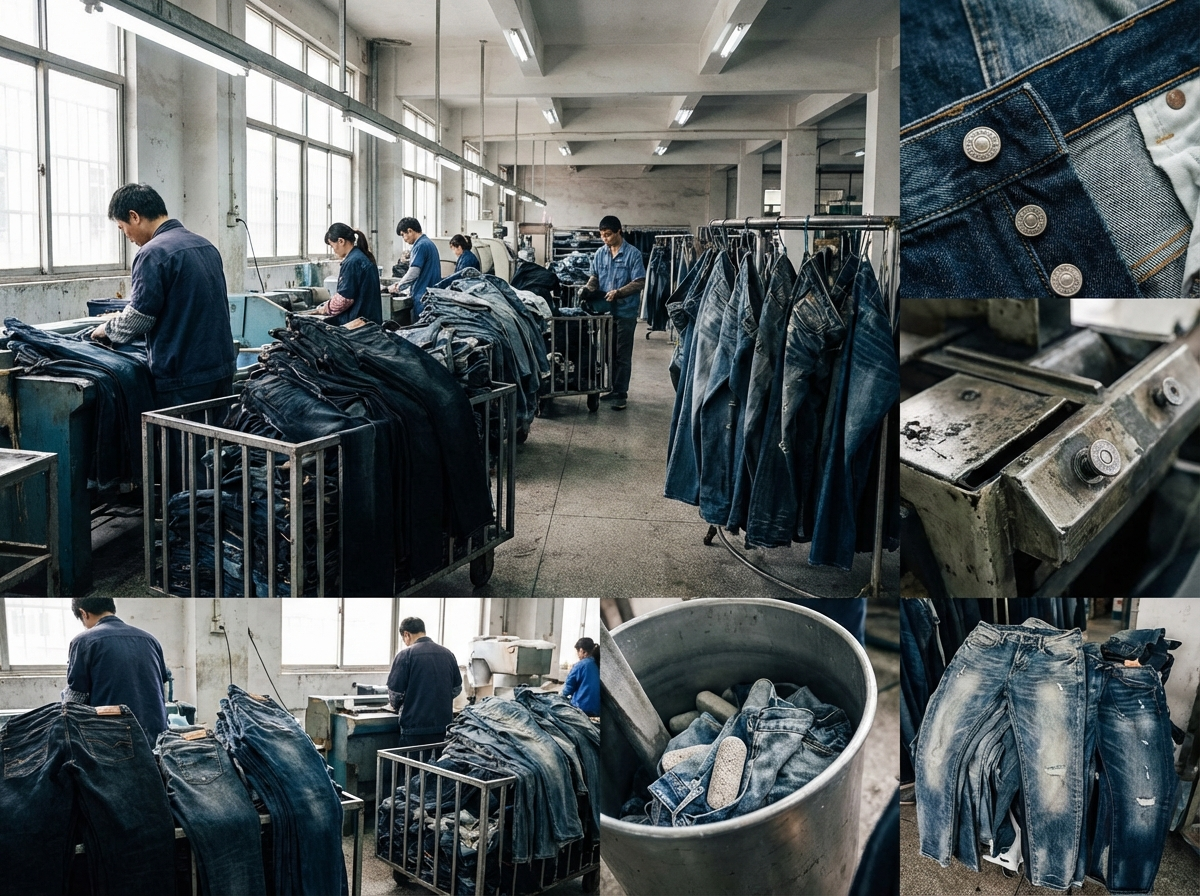
Washing is one of the defining elements of denim product development. It affects not only color, but also texture, softness, attitude, and market positioning. Two jeans made from the same base fabric can feel like completely different products after different washing and finishing treatments.
1. Why washing matters so much in denim
Washing shapes color depth, hand feel, softness, vintage character, surface contrast, shrinkage outcome, mood, and perceived value.
2. Rinse wash
Rinse wash lightly cleans and softens while preserving indigo depth. It is common for clean commercial styles.
3. Stone wash
Stone wash increases surface fading and softness for a broken-in feel. Consistency control matters.
4. Enzyme wash
Enzyme wash is often used to soften and create a cleaner faded effect, balancing comfort and appearance.
5. Acid wash and stronger vintage effects
High-contrast fashion effects require strong wash expertise and tight control to avoid excessive variation.
6. Whiskering and hand sanding
Adds dimension and authenticity but should be balanced to avoid an artificial look.
7. Distressing and rips
Creates strong identity but introduces stability and repeatability questions in bulk.
8. Raw or dry finish
Minimal washing preserves fabric character and targets heritage/premium markets.
9. Washing affects fit and measurements
Shrinkage and garment behavior change after finishing. Fit approval should be based on washed samples.
10. Washing affects cost
Labor intensity, chemicals, hand work, and QC all impact cost depending on wash choice.
Conclusion
Jeans washing is a technical and commercial decision that shapes the final product. The best finishes align with your concept, customer expectations, and manufacturing capability.