
Blog
How to Start a Jeans Brand: Complete Guide for 2026
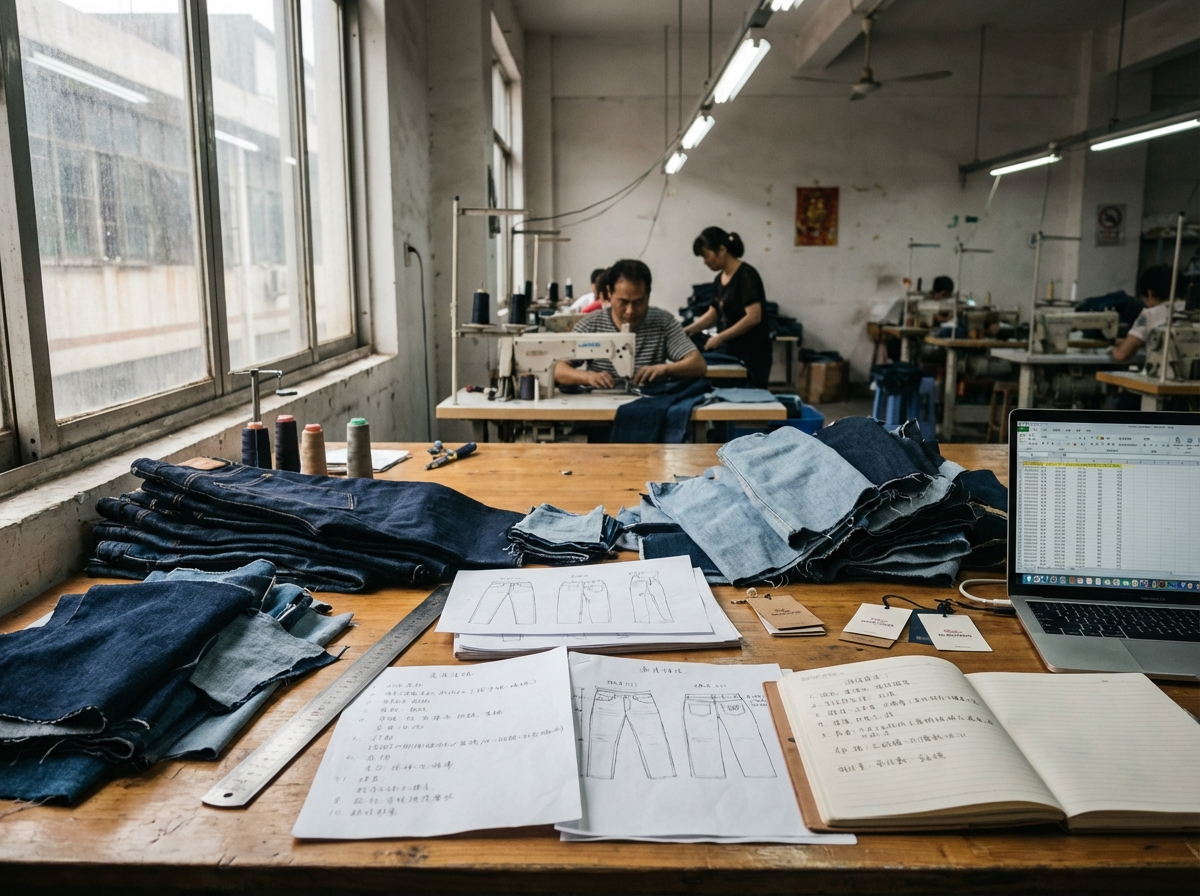
Starting a jeans brand looks simple from the outside. Many people focus first on logos, moodboards, or social media, but denim is one of the most technical product categories in apparel. Fit, fabric weight, wash development, shrinkage control, hardware, stitching consistency, and production planning all matter. If you approach jeans like a generic T-shirt project, you will almost always face delays, quality issues, or cost surprises.
The good news is that a jeans brand can absolutely start small and grow in a disciplined way. The key is to build the business in the right order: product concept first, technical clarity second, factory alignment third, and branding after the foundation is stable.
1. Define your product position clearly
Before talking to any manufacturer, decide what kind of denim brand you are building. “Jeans brand” is too broad. A factory needs direction. You should know whether you are developing:
- minimalist everyday denim
- workwear-inspired jeans
- fashion-forward washed denim
- premium selvedge products
- stretchy comfort jeans
- women’s fit-focused denim
- men’s classic straight-leg styles
- streetwear denim with oversized cuts
A strong brand position helps you make better choices on fabric, wash, trims, price point, and packaging. It also prevents one of the most common mistakes in early development: mixing too many product ideas into the first collection.
A new brand usually performs better when the first launch is focused. Instead of trying to offer ten different silhouettes, start with two or three strong styles that clearly express your identity.
2. Understand the technical side of denim
Denim is not just blue fabric. The final result depends on several technical layers working together:
- fabric composition
- fabric weight
- stretch level
- shrinkage behavior
- wash process
- pattern accuracy
- stitch density
- seam construction
- hardware quality
- finishing consistency
For example, a 100% cotton rigid denim will behave very differently from a stretch denim containing elastane. A heavily washed vintage look can affect hand feel, color consistency, and garment measurements. A factory may be able to sew the jeans correctly, but if the wash process is not controlled, the final size and appearance can still become inconsistent.
This is why successful denim brands do not treat sampling as a formality. Sampling is where fit, construction, and wash balance are tested.
3. Start with product development, not bulk production
Many first-time founders rush to pricing and MOQ before the product is actually ready. That creates weak communication with the factory. A manufacturer can only quote properly when the main details are clear.
Ideally, you should prepare:
- reference photos
- target fit description
- intended fabric type
- wash direction
- trim requirements
- label and branding plans
- expected quantity range
- target market and price point
If you have a tech pack, even better. If you do not, a capable manufacturer can often help you convert references into sample-ready instructions. But the more organized your input is, the smoother the process becomes.
A good first goal is not “place order fast.” It is “develop one sample that proves the brand direction.”
4. Choose the right manufacturing model
There are usually three realistic starting paths:
Custom development
Best for founders who want original fits, unique washes, and full control over brand identity. This gives you the strongest differentiation, but it takes more time and development budget.
Private label
Best for founders who want a faster route to launch. You use ready or semi-ready base styles and apply your own label, patch, packaging, or selected modifications. This is efficient if speed matters more than fully original pattern development.
Low MOQ development
Best for testing demand with lower risk. This allows you to validate fit, pricing, and customer response before scaling into larger production runs.
The right choice depends on your budget, timeline, and level of product experience.
5. Build your first collection with discipline
A first collection should be commercially smart, not emotionally overloaded. Denim brands often fail at launch because they over-design or over-expand too early.
A better first collection usually includes:
- one core fit
- one second fit for contrast
- one hero wash
- one clean everyday wash
- one signature branding detail
That is enough to test customer reaction while keeping production manageable.
If you add too many fabrics, too many washes, or too many fit experiments in the first run, development becomes slower and more expensive. Focus creates stronger identity and easier factory execution.
6. Sampling is where your brand becomes real
The sample stage is not just checking whether the jeans “look nice.” It is the point where you validate:
- rise and seat balance
- leg shape
- inseam and outseam proportions
- pocket placement
- waistband comfort
- wash result
- shrinkage
- stitching quality
- trim placement
- branding accuracy
Most brands need revisions. That is normal. What matters is having a clear revision process. Do not change everything randomly between rounds. Review the sample systematically and note:
- what fits correctly
- what feels off
- what needs visual improvement
- what affects cost
- what affects repeatability in production
A professional manufacturer will guide this process, but the brand still needs to make decisions clearly.
7. Costing matters more than many founders expect
In denim, the final cost is influenced by more than base sewing. Pricing is shaped by:
- fabric choice
- fabric consumption
- wash complexity
- distressing and hand work
- hardware type
- labeling and packaging
- order volume
- sampling cost
- freight method
- export documentation
A jean that looks simple on Instagram may still be expensive to produce if it uses premium fabric, multiple washes, and custom trims.
This is why product-market fit and margin planning should happen early. A beautiful design is not enough. The product must also make sense at your intended selling price.
8. Branding should support the product, not replace it
In denim, branding is important, but product quality comes first. Good brands are remembered because the fit works, the fabric feels right, and the wash looks intentional.
Branding elements that matter include:
- main label
- care label
- size label
- leather patch
- hang tag
- button or rivet branding
- packaging presentation
But none of these can save a weak garment. Strong denim brands win when product and branding reinforce each other.
9. Think beyond launch
A real brand is not just one order. From the beginning, think about repeatability.
Ask:
- Can this fit be reordered consistently?
- Can this wash be matched again?
- Can this supplier scale with us?
- Can quality remain stable across larger runs?
- Can our packaging process stay organized as volume grows?
The brands that last are not always the ones with the flashiest first drop. They are the ones that build reliable systems early.
Conclusion
Starting a jeans brand is not about chasing trends alone. It is about making disciplined choices in fit, fabric, wash, branding, and production. The more clearly you define your product and communicate with your manufacturer, the more efficiently you can move from idea to launch.
If you are serious about building a denim brand, start with a focused concept, develop samples carefully, and work with a manufacturing partner who understands both product development and scalable production.