
Blog
Choosing a Jeans Manufacturer in China: What to Look For
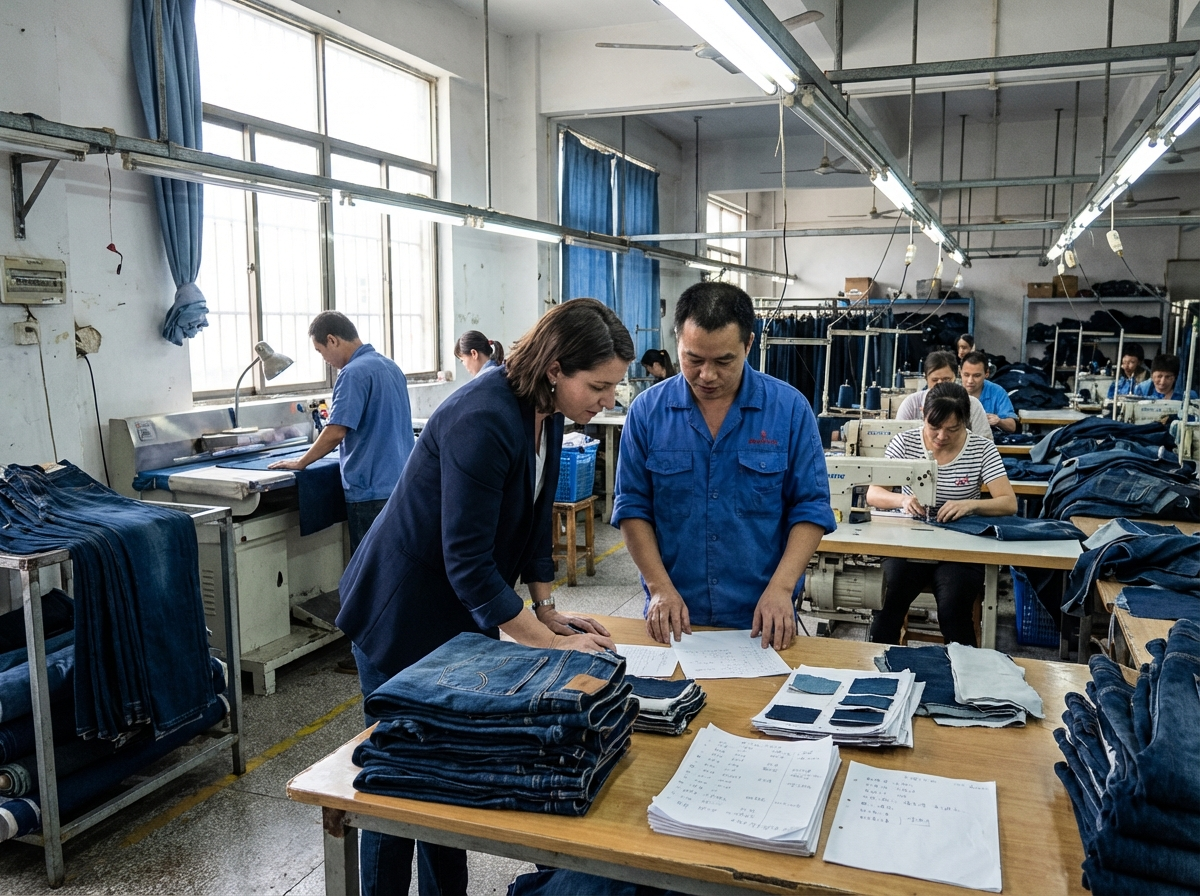
Choosing a jeans manufacturer in China is not only about finding the lowest price. In denim production, the real difference between a good supplier and a risky one shows up in sampling quality, wash consistency, communication speed, problem solving, and the ability to repeat results in bulk.
Many buyers search for “jeans manufacturer in China” and quickly receive dozens of options. But factories may vary greatly in capability. Some are strong in sewing but weak in wash development. Some offer low prices but poor quality control. Others can produce samples well but struggle with bulk consistency.
The right decision comes from understanding what a denim manufacturer should actually be able to do.
1. Check whether they truly understand denim
Not every garment factory is a strong denim factory. Denim is more technical than many apparel categories because it combines:
- structure-heavy sewing
- fabric behavior under wash
- size changes after finishing
- hardware installation
- repeatability across bulk runs
A factory that mainly produces light casualwear may not be the right partner for jeans, even if they claim they can do it.
Ask practical questions:
- What types of jeans do you produce most often?
- Do you handle rigid and stretch denim?
- Do you offer in-house washing or work with partner facilities?
- Can you support fit development and sample revisions?
- What quality checkpoints do you follow for denim?
A strong manufacturer should answer clearly and specifically, not vaguely.
2. Evaluate sample development capability
Sampling tells you far more than a quotation ever will. A good jeans manufacturer should be able to turn references, sketches, or tech packs into a workable sample with clear communication.
Look for:
- understanding of fit comments
- ability to revise patterns correctly
- wash development support
- trim and hardware sourcing
- realistic timeline estimates
- willingness to clarify unclear instructions
If the first sample is not perfect, that is normal. What matters is how the factory handles corrections. A reliable partner responds with logic and process, not excuses.
3. Ask about washing and finishing
In denim, wash quality changes everything. Even if the sewing is excellent, weak wash control can ruin the garment.
You should ask:
- What wash types do you support?
- Can you do rinse, stone wash, enzyme wash, acid wash, vintage effects, whiskering, sanding, or distressing?
- How do you control shade consistency?
- How do you manage shrinkage after washing?
- Can you match wash references from previous samples?
Wash capability is one of the most important filters when choosing a manufacturer.
4. Review communication quality
One of the most underestimated factors in sourcing is communication. A technically capable factory can still be a bad fit if updates are slow, unclear, or inconsistent.
A good manufacturing partner should be able to:
- confirm requirements clearly
- identify missing details early
- explain what is possible and what is risky
- provide timeline visibility
- respond to revisions without confusion
Fast communication alone is not enough. What matters is useful communication.
5. Understand their MOQ and flexibility
A good jeans manufacturer should be honest about MOQ, because different styles and fabrics carry different production realities.
The right questions are:
- What is your MOQ per style?
- Is MOQ different for custom washes?
- Can sizes and colors be mixed?
- Do low MOQ orders cost more?
- Can reorders be smaller after first production?
Flexibility matters especially for startup brands and smaller importers. But buyers should also understand that very low quantities may increase unit cost or limit customization.
6. Ask about quality control process
Do not settle for a simple statement like “we do QC.” Ask what that means.
A serious manufacturer should be able to explain:
- fabric inspection
- cutting check
- in-line sewing check
- post-wash check
- measurement control
- final inspection
- packing verification
If they use AQL or provide QC reports, that is even better. The more transparent the QC system, the more confidence you can have in bulk production.
7. Confirm export readiness
For international buyers, manufacturing is only half the job. Export readiness matters too.
Check whether the supplier can support:
- commercial invoice
- packing list
- certificate of origin if needed
- shipping coordination
- carton marking
- barcode and packaging requirements
- communication with freight forwarders
A factory that understands export workflows reduces mistakes and delays later.
8. Compare more than price
Many buyers compare suppliers only by unit cost. That is risky. A lower unit price can become more expensive if it leads to:
- repeated sample revisions
- poor fit accuracy
- wash inconsistency
- delayed delivery
- damaged brand reputation
- high defect rates
A slightly higher price from a reliable denim manufacturer can be the better commercial choice if it improves consistency, communication, and repeat orders.
9. Look for long-term suitability
A supplier should not only be able to make your current order. They should also fit your future direction.
Think about:
- scaling capacity
- ability to repeat core styles
- willingness to improve development
- compatibility with your branding level
- production stability during growth
Conclusion
Choosing a jeans manufacturer in China should be a structured decision based on denim capability, sample development, wash control, communication, QC, MOQ logic, and export readiness. The best supplier is not always the cheapest one. It is the one that can develop the right product, deliver it consistently, and grow with your brand or buying program.